BACKGROUND
TIMBERPRO COATINGS:
PRODUCT LABEL DESIGN
I designed a scalable label system for TimberPro Coatings, a professional-grade coatings brand, focused on improving clarity, consistency, and usability across four product categories.
This project involved designing labels for physical products, where information must be understood quickly and under imperfect conditions. The challenge was to organize dense product information into a clear visual hierarchy that supports fast scanning, accurate product identification, and confident purchasing decisions—while maintaining a cohesive brand presence across the line.
I began by exploring three distinct label directions for a single product, evaluating each for clarity, hierarchy, and scalability. After recommending a direction that best supported a system-based approach, I refined the design and applied it across the remaining labels, making targeted iterations to ensure consistency and ease of extension.

Visual Research & Brand Alignment
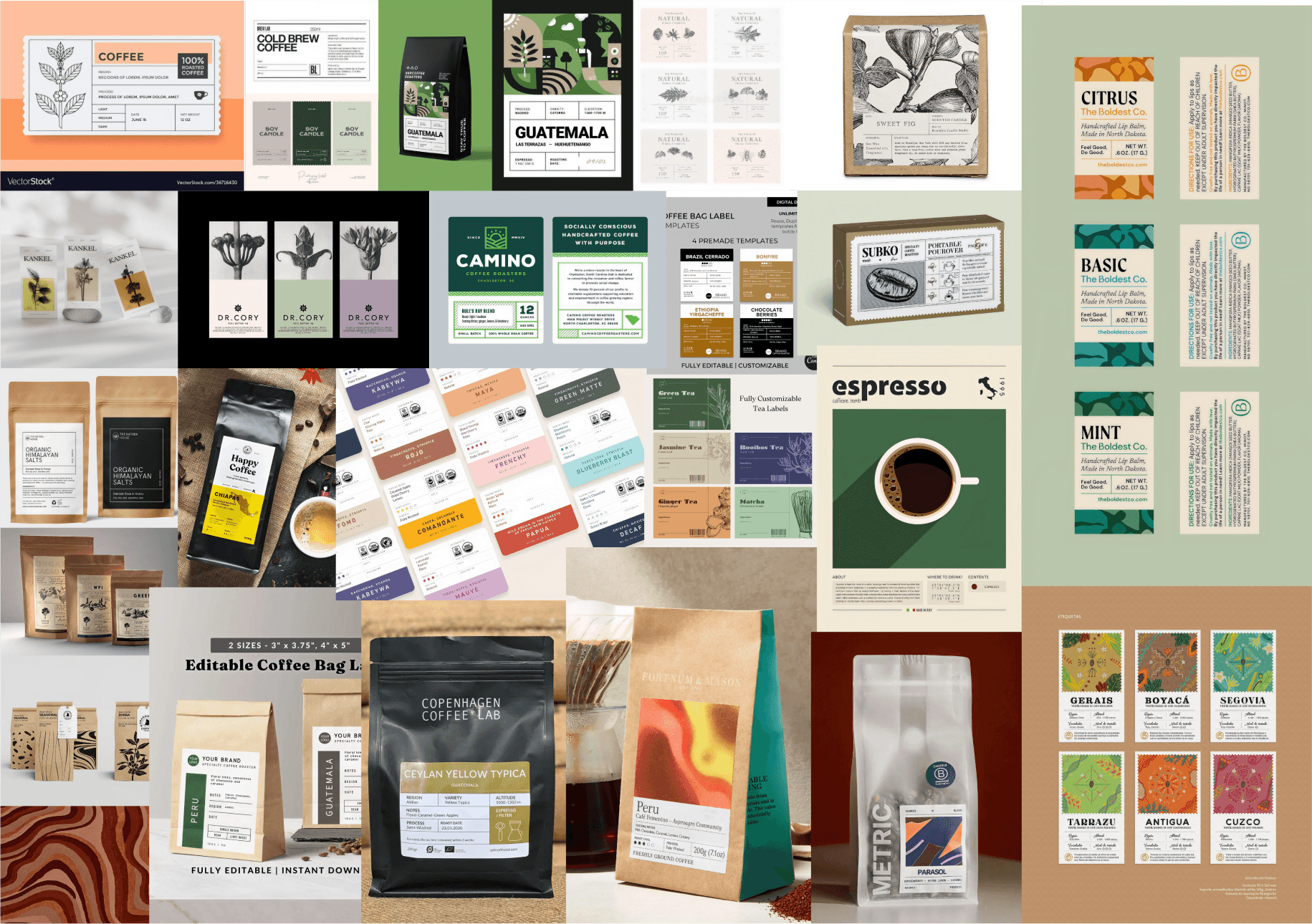
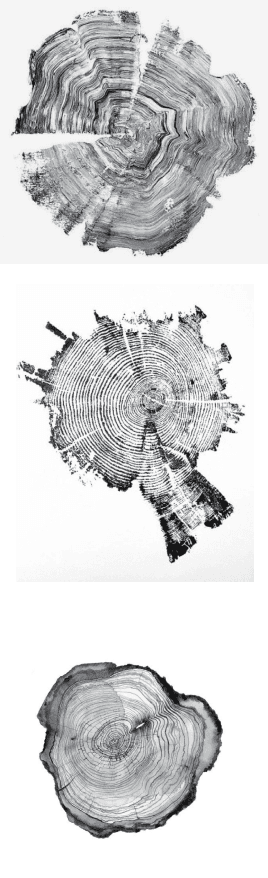
I began the process with visual research, creating a moodboard of contemporary label designs across a range of industries. Rather than limiting inspiration to paint and coatings, I looked to categories such as tea and coffee packaging, where modern, minimal labeling and clear hierarchy are often executed well. This broader exploration supported the client’s goal of a design that felt fresh and modern while remaining credible in a professional context.
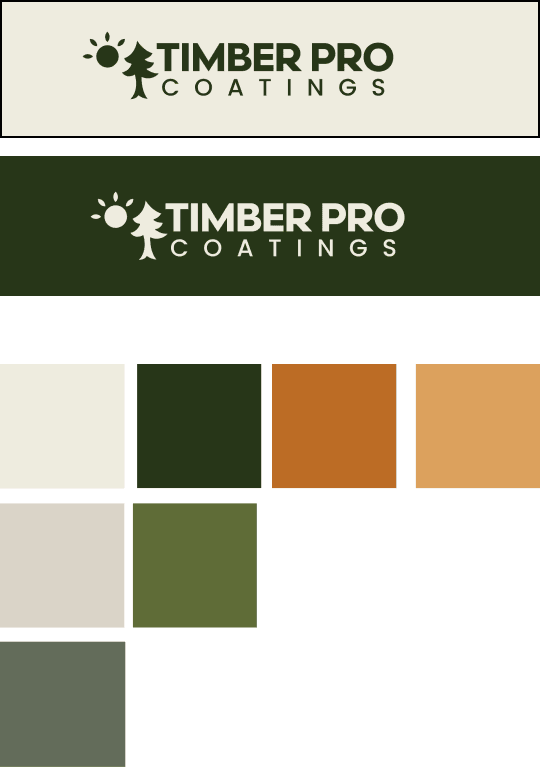
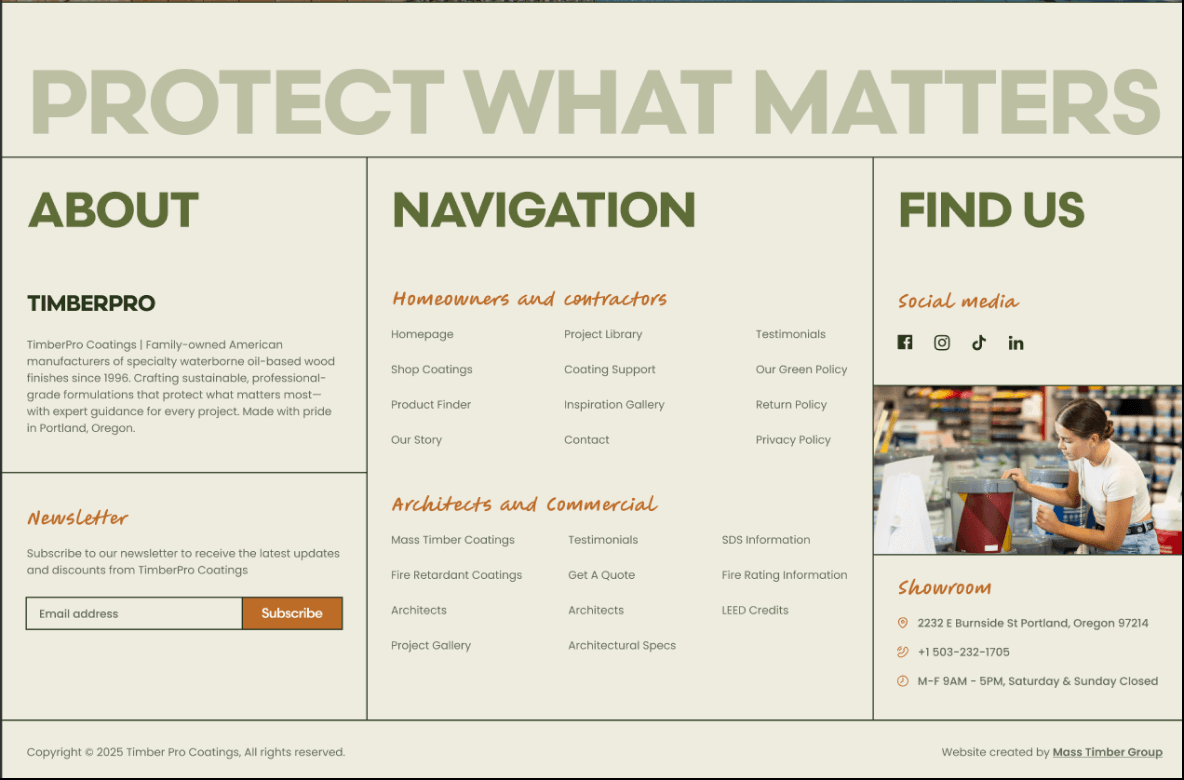
With no existing brand guidelines in place, I then conducted a design audit of TimberPro’s website to understand the existing visual language and establish a foundation for the labels. This audit informed key decisions around color palette, typography, container styling, and logo usage, ensuring the labels aligned with the brand’s current digital presence and felt cohesive across touchpoints.
Concept exploration
Building on the visual research and brand audit, I explored three distinct label directions for a single product. Each concept tested a different approach to information hierarchy, visual emphasis, and brand expression, while working within the same content and production constraints.
The goal of this phase was not to arrive at a final design immediately, but to evaluate how each direction would perform when scaled across multiple product categories. Particular attention was given to scannability, product differentiation, and long-term flexibility.
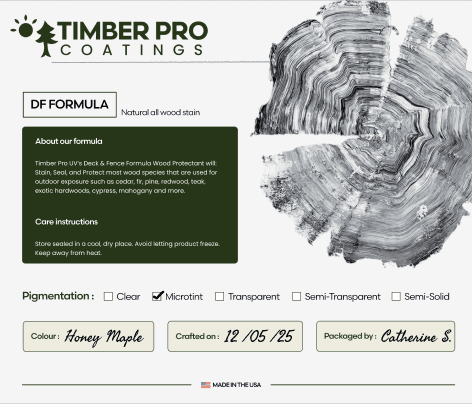
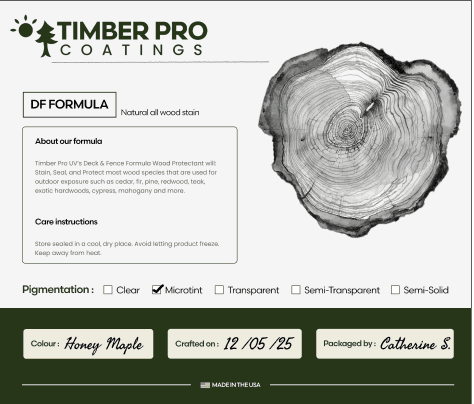
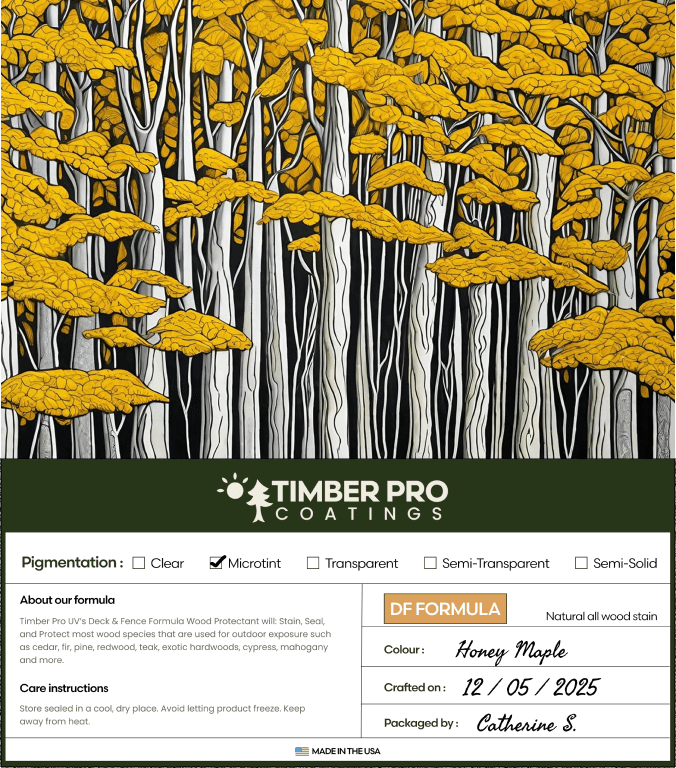
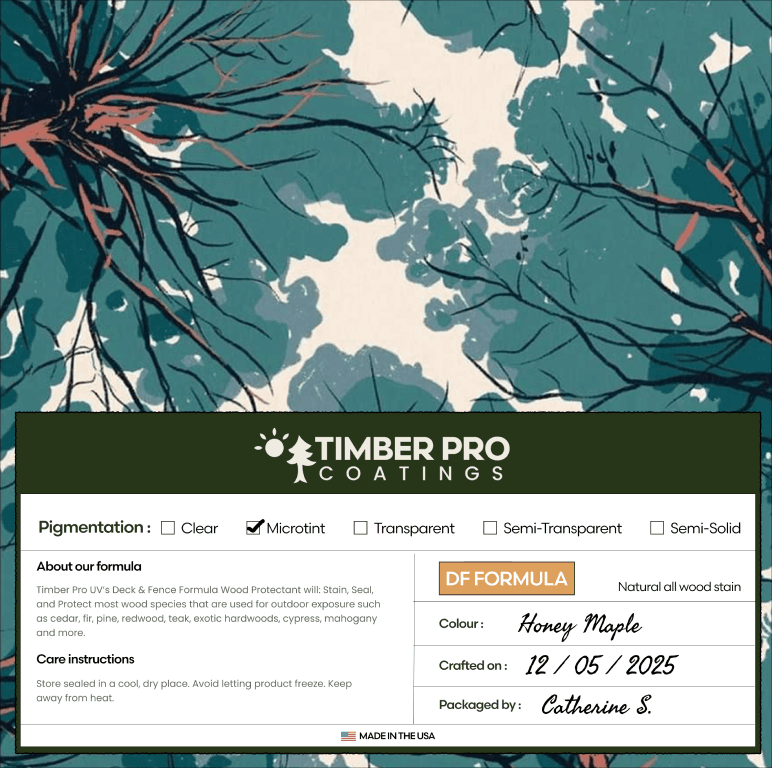
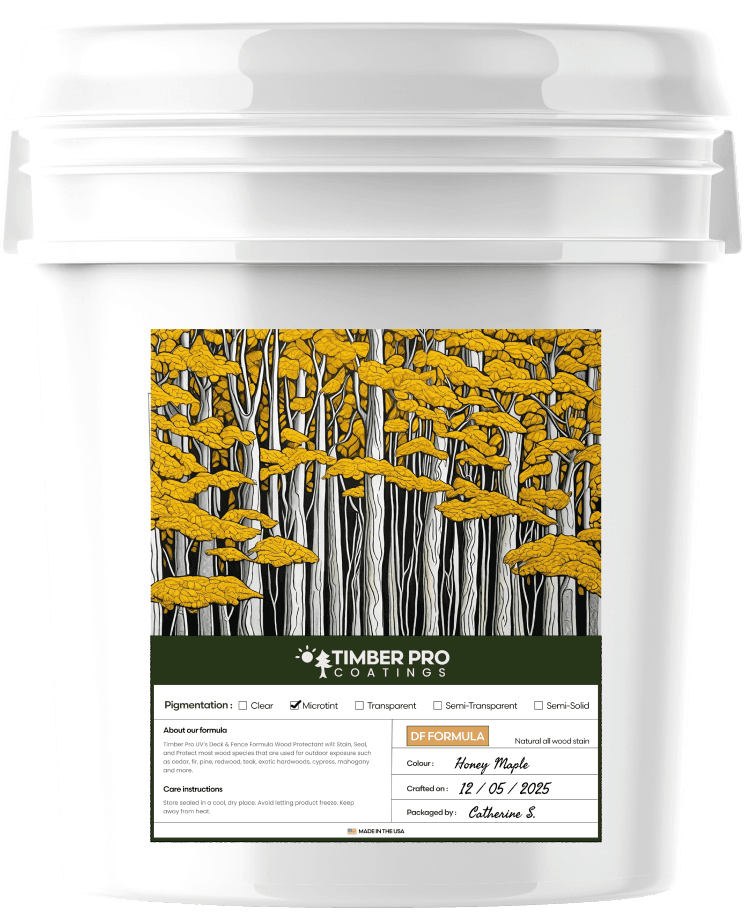
Following review, I recommended Design Concept 2, as it best balanced clarity, consistency, and scalability while delivering the fresh, modern aesthetic the client was seeking. This direction provided a strong foundation for a system-based solution and was selected to be refined and applied across the remaining product labels.
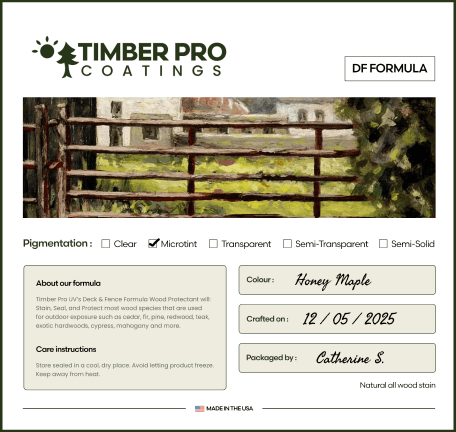
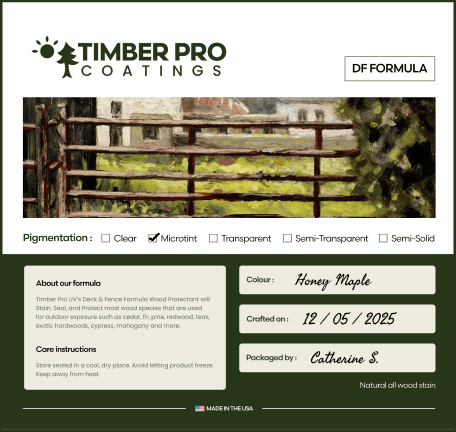
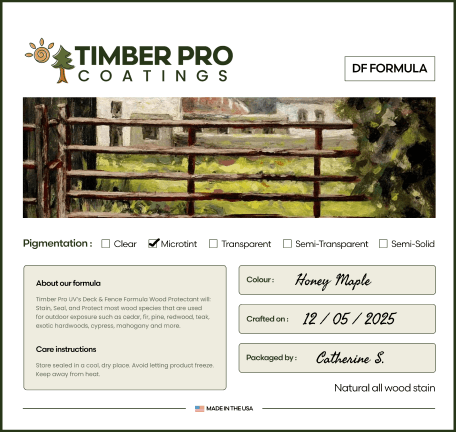
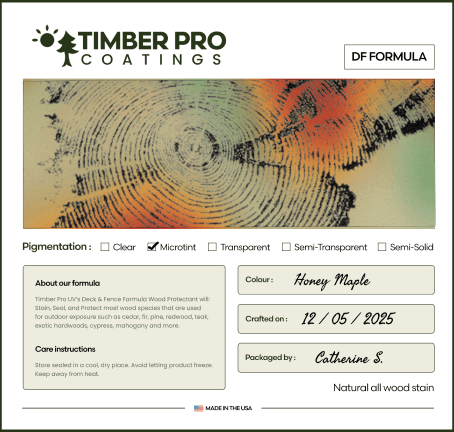
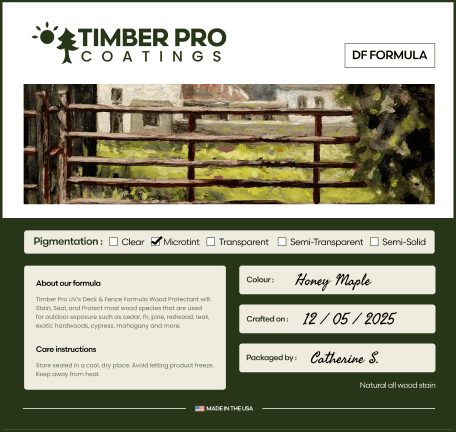
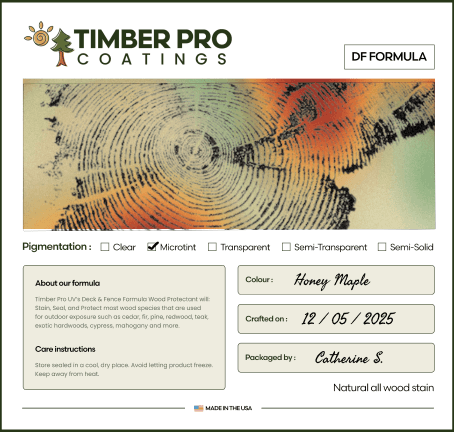
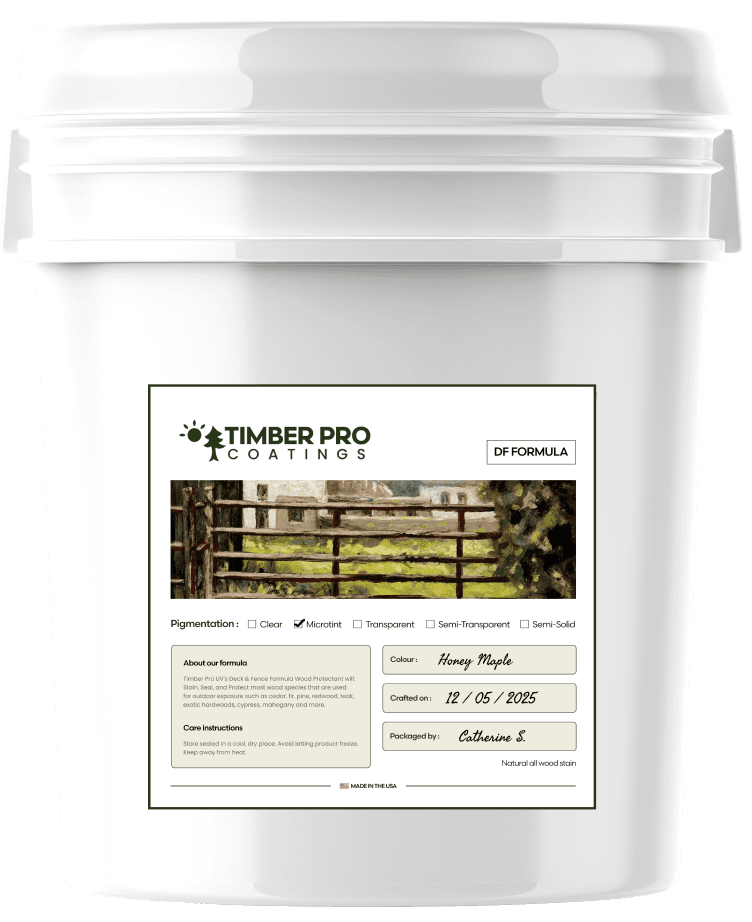
DESIGN CONCEPT 2
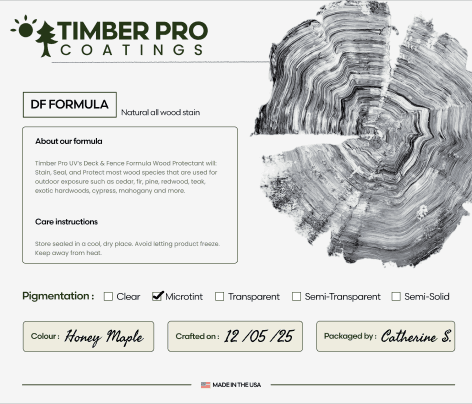
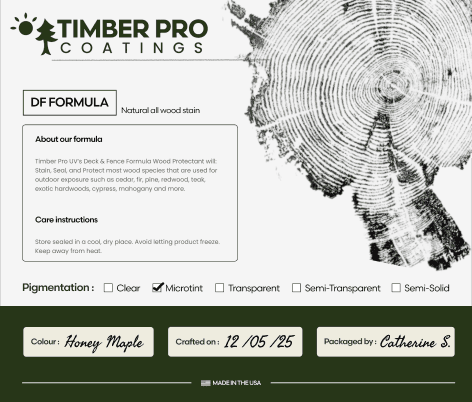
Final Iteration
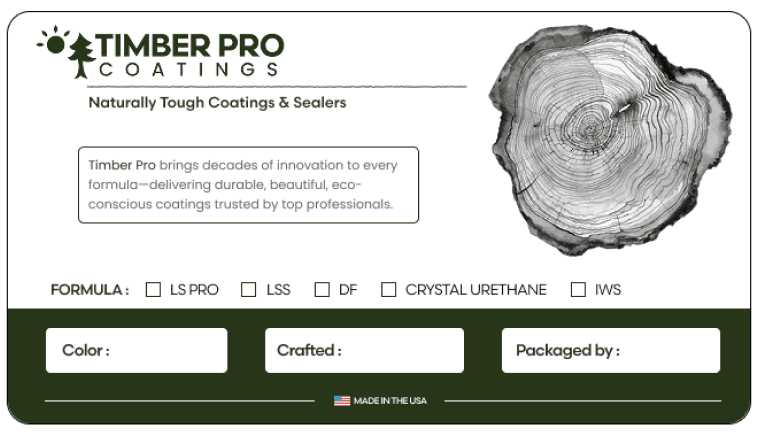
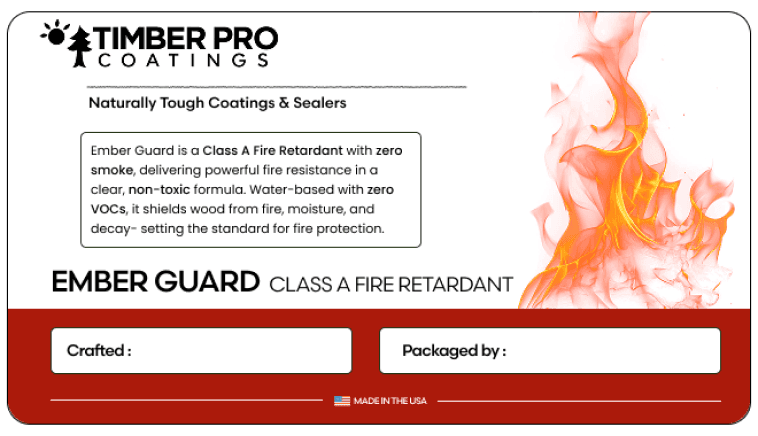
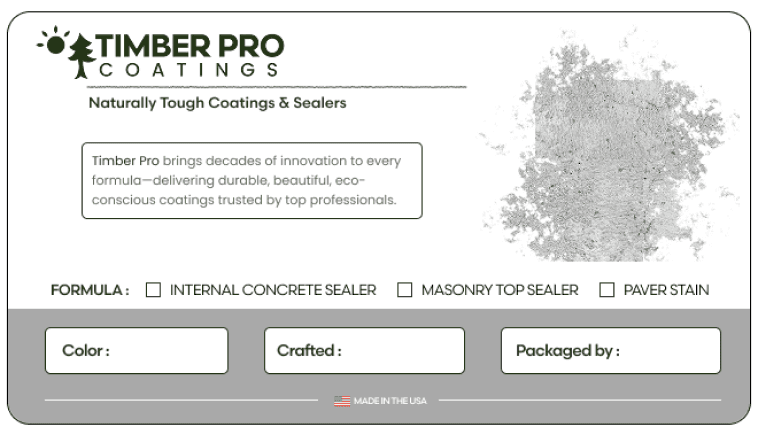
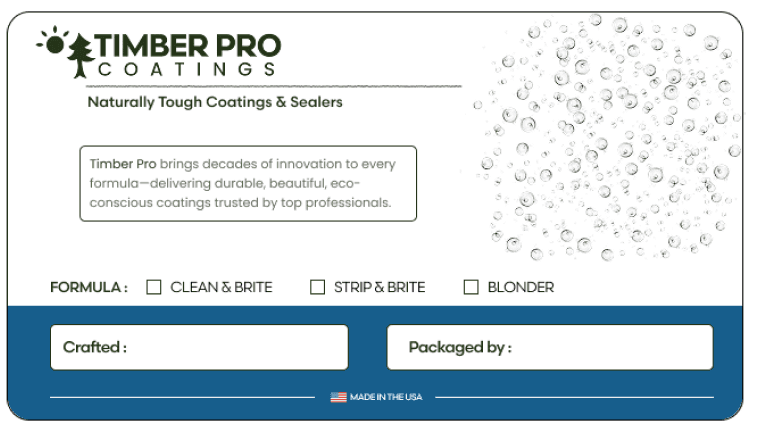
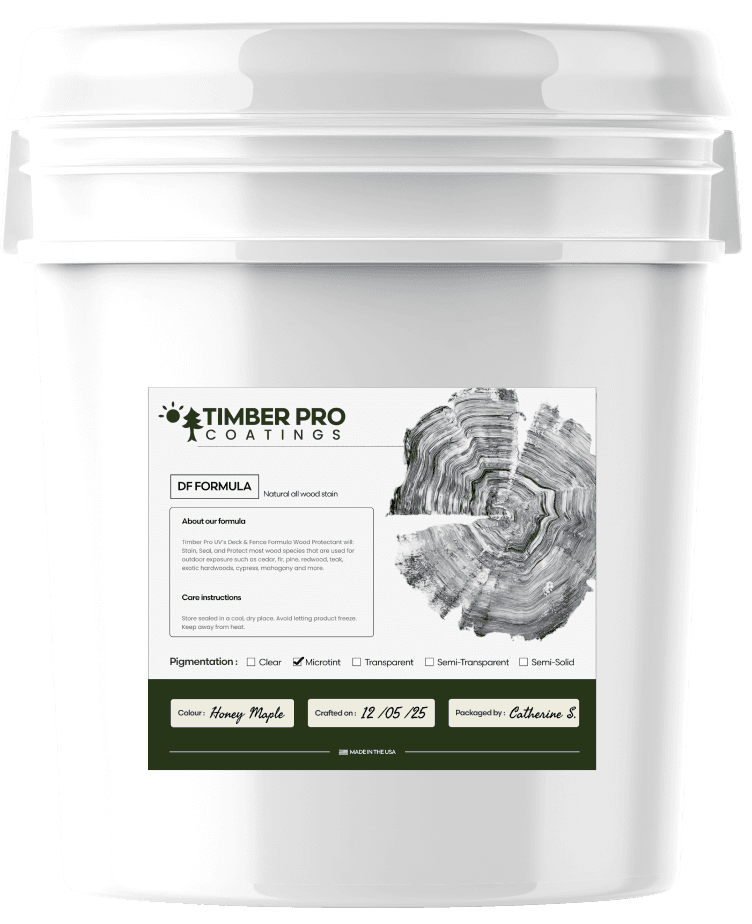
In the final iteration, the core label structure remained consistent across all products, with category differentiation handled primarily through imagery. This approach preserved a unified visual system while allowing each product category to be clearly identifiable at a glance.
Ember Guard, a new product offering, was treated as a deliberate exception within the system. To support the client’s goal of making the product stand out, its label features a color image (red flame), while the remaining product labels retain black-and-white imagery. This controlled use of color creates contrast without disrupting the overall system, allowing Ember Guard to “pop” while maintaining brand cohesion.